Our Pediatric Diabetes and Endocrinology Division has been honored to develop lasting, mutually beneficial partnerships with Oklahoma American Indian nations and tribes, as well as the Oklahoma City Area Office of the Indian Health Service. These partnerships were initially established to provide care for American Indian children, with the relationship evolving over time to include collaborative research.
The research relationship began in 2000, when leaders from our Division began discussions with our partners about their interest in research focused on Type 2 diabetes in youth, a growing concern in American Indian communities. Our pediatric endocrinologists began providing diabetes and endocrinology services on-site within American Indian communities. Through ongoing conversations and collaboration, the partners established a formal agreement for the first clinical trial focused on Type 2 diabetes in young people: Treatment Options for Type 2 Diabetes in Youth and Adolescents (TODAY), sponsored by the National Institutes of Health (NIH).
Through this partnership, more than 40% of participants screened for the TODAY Study were American Indian. Our American Indian partners helped the study leadership understand the cultural and historical factors important to conducting research within American Indian communities. They also helped tailor the TODAY protocol to be culturally relevant, identify unique risks and benefits for American Indian participants, and contribute to the development of publications and presentations. The partnership established through the TODAY Study provided a model for future research collaborations with American Indian nations and tribes. Learn more about the partnership and its impact.
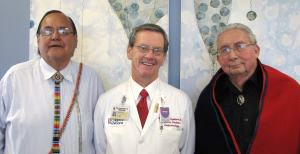 When our Division moved into its new building in 2009, we were honored to receive a ceremonial Native American blessing from leaders of the Oklahoma City Indian Clinic. The cedar ceremony represented a shared commitment to health and wellness and honored the partnership between our organizations.
Today, our Division continues to provide on-site diabetes and endocrinology services to American Indian patients in Ada, Ardmore, Durant, and Talihina. Our longstanding, multi-tribal research relationships have also led to additional academic and research partnerships. This work includes studying how maternal diabetes may affect the health of children, who may face an increased risk of obesity and diabetes later in life.
The Offspring Study: An NIH-funded study conducted in partnership with the Chickasaw and Choctaw Nations found that children born to mothers with diabetes during pregnancy burned fewer calories than expected because of a reduced capacity to utilize fat, even when the mother’s diabetes was well controlled. Subsequent studies suggested that this may be related to a reduction in mitochondria, the cellular structures responsible for metabolizing fat. By better understanding how a mother’s health affects her children as they grow, we can identify ways to support their health and reduce the risk of diabetes and obesity in future generations.
The MOVE Study: In partnership with the Choctaw Nation and with funding from the NIH, the MOVE Study examined whether financial incentives could increase the frequency and duration of exercise among American Indian youth at high risk for developing diabetes. The study found that financial incentives increased the duration of exercise sessions but had minimal effects on exercise participation. In addition to learning more about factors that may motivate young American Indians to exercise, the study provided valuable insight into conducting a randomized clinical trial in a rural American Indian community.
For more than 20 years, our Division has learned from and contributed to partnerships with American Indian nations and tribes, as well as the Oklahoma City Area Office of the Indian Health Service. We look forward to continuing these respectful, collaborative relationships while advancing our understanding of clinical care and research with American Indian communities.