Academic Section(s):
Microbiology and Immunology
Education:
Ph.D. - 1982, Kansas State University
Fellowship:
University of California at Los Angeles
Clinical/Research Interests:
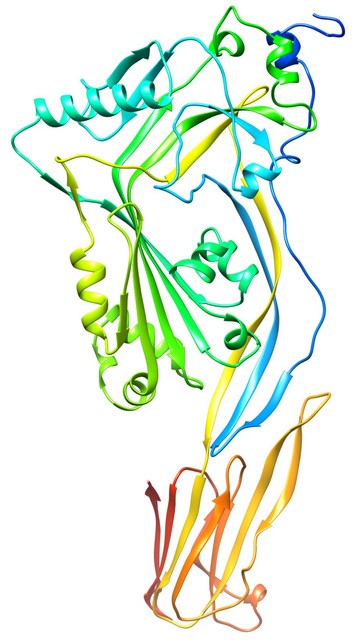
Studies pore-forming toxins molecular mechanisms. Over the last 40 years we have focused our research on the study of the mechanism of pore-forming toxins from prokaryotic and eukaryotic sources, although we have recently expanded into studies that involve antibacterial toxins produced by major gut bacteria species. Our studies have primarily focused on the pore-forming mechanisms of a variety of toxins produced by a wide variety of pathogenic bacteria with an emphasis on the cholesterol dependent cytolysins (CDCs). More than 100 bacteria species carry a gene for a CDC and they have been shown to play significant roles in the pathogenesis of such bacterial species as Clostridium perfringens (gas gangrene), Listeria monocytogenes (listeriosis), Streptococcus pneumoniae (pneumonia, meningitis) and Streptococcus pyogenes (strep throat, necrotizing fasciitis). Our studies of the CDC structure and pore-forming formed the basis for understanding of how human immune defense proteins, such as the complement membrane attack complex (MACPF) and the perforin family of proteins form their pores in the cell membrane. Our studies have led to a deep understanding of how these toxins attack cells and in the case of the CDC from Streptococcus pneumoniae, our studies have led to the development of the next generation of vaccine for streptococcal pneumonia, which is in clinical studies.
Studies on the CDC-like pore-forming proteins. More recently we have made a major move into a new area of research that involves our discovery of a large family of distant relatives of the CDCs we have termed the CDC-like pore-forming toxins (CDCLs). The genes for CDCLs are present in >500 species of bacteria that span ecological niches from the Saharan desert to the Arctic and Antarctic waters and are found in numerous major bacterial species of the Bacteriodales in the human oral and colonic microbiomes. We have now shown that the CDCLs assemble a pore using a mechanism unique to bacterial pore-forming toxins, which resembles the mechanism of the human immune defense complement membrane attack complex. We have also shown that the CDCLs produced by species of the Bacteroides, Phocaeicola and Prevotella genera are antibacterial toxins and attack closely related species. This suggests the CDCLs function in bacterial competition in the gut and oral microbiomes. The study of these CDC-like proteins is just beginning and will likely lead to a new frontier of study to understand how these proteins assemble a pore, their bacterial targets and how they impact the gut microbiome.
Select Honors and Accomplishments:
Member, National Academy of Sciences
Southeastern Conference (SEC) Faculty Achievement Award
Inaugural Stanton L. Young Excellence in Research Award
J. J. Ferretti Endowed Chair
George Lynn Cross Research Professor
National Institute of Health (NIAID) Merit Award
Fellow, American Academy of Microbiology
President’s Associates Presidential Professor (2009, 2013)
Endowed Professor
Select Publications:
- Johnstone, B. A., Christie, M. P., Joseph, R., Morton, C. J., Brown, H. G., Hanssen, E., Sanford, T. C., Abrahamsen, H. L., Tweten, R. K., and Parker, M. W. (2025) Structural basis for the pore-forming activity of a complement-like toxin, Sci Adv 11, eadt2127.
- Abrahamsen, H. L., Sanford, T. C., Collamore, C. E., Johnstone, B. A., Coyne, M. J., Garcia-Bayona, L., Christie, M. P., Evans, J. C., Farrand, A. J., Flores, K., Morton, C. J., Parker, M. W., Comstock, L. E. & Tweten, R. K. Distant relatives of a eukaryotic cell-specific toxin family evolved a complement-like mechanism to kill bacteria. Nat Commun 15, 5028 (2024).
- Evans, J. C., McEneany, V. L., Coyne, M. J., Caldwell, E. P., Sheahan, M. L., Von, S. S., Coyne, E. M., Tweten, R. K. & Comstock, L. E. A proteolytically activated antimicrobial toxin encoded on a mobile plasmid of Bacteroidales induces a protective response. Nat Commun 13, 4258 (2022).
- Evans, J. C., Johnstone, B. A., Lawrence, S. L., Morton, C. J., Christie, M. P., Parker, M. W. & Tweten, R. K. A key motif in the cholesterol-dependent cytolysins reveals a large family of related proteins. mBio 11 (2020).
- Wade, K. R., Lawrence, S. L., Farrand, A. J., Hotze, E. M., Kuiper, M. J., Gorman, M. A., Christie, M. P., Panjikar, S., Morton, C. J., Parker, M. W. & Tweten, R. K. The structural basis for a transition state that regulates pore formation in a bacterial toxin. MBio 10 (2019).
- Burns, J. R., Morton, C. J., Parker, M. W. & Tweten, R. K. An intermolecular pi-stacking interaction drives conformational changes necessary to beta-barrel formation in a pore-forming toxin. mBio 10 (2019).
- Wade, K. R., Hotze, E. M., Kuiper, M. J., Morton, C. J., Parker, M. W. & Tweten, R. K. An intermolecular electrostatic interaction controls the prepore-to-pore transition in a cholesterol-dependent cytolysin. Proc Natl Acad Sci U S A 112, 2204-2209 (2015).
- Wade, K. R., Hotze, E. M., Briles, D. E. & Tweten, R. K. Mouse, but not human, ApoB-100 lipoprotein cholesterol is a potent innate inhibitor of Streptococcus pneumoniae pneumolysin. PLoS Pathog 10, e1004353 (2014).
- Sato, T. K., Tweten, R. K. & Johnson, A. E. Disulfide-bond scanning reveals assembly state and beta-strand tilt angle of the PFO beta-barrel. Nat Chem Biol 9, 383-389 (2013).
- Dowd, K. J., Farrand, A. J. & Tweten, R. K. The cholesterol-dependent cytolysin signature motif: a critical element in the allosteric pathway that couples membrane binding to pore assembly. PLoS Pathog 8, e1002787 (2012).
- Farrand, A. J., LaChapelle, S., Hotze, E. M., Johnson, A. E. & Tweten, R. K. Only two amino acids are essential for cytolytic toxin recognition of cholesterol at the membrane surface. Proc Natl Acad Sci U S A 107, 4341-4346 (2010).
- Soltani, C. E., Hotze, E. M., Johnson, A. E. & Tweten, R. K. Structural elements of the cholesterol-dependent cytolysins that are responsible for their cholesterol-sensitive membrane interactions. Proc Natl Acad Sci U S A 104, 20226-20231 (2007).
- Schuerch, D. W., Wilson-Kubalek, E. M. & Tweten, R. K. Molecular basis of listeriolysin O pH dependence. Proc Natl Acad Sci U S A 102, 12537-12542 (2005).
- Giddings, K. S., Zhao, J., Sims, P. J. & Tweten, R. K. Human CD59 is a receptor for the cholesterol-dependent cytolysin intermedilysin. Nat Struct Mol Biol 11, 1173-1178 (2004).
- Czajkowsky, D. M., Hotze, E. M., Shao, Z. & Tweten, R. K. Vertical collapse of a cytolysin prepore moves its transmembrane beta-hairpins to the membrane. EMBO J 23, 3206-3215 (2004).
- Mourez, M., Yan, M., Lacy, D. B., Dillon, L., Bentsen, L., Marpoe, A., Maurin, C., Hotze, E., Wiggelsworth, Pimental, R., Ballard, J. D., Collier, R. J. & Tweten, R. K. Mapping dominant-negative mutations of anthrax protective antigen by scanning mutagenesis. Proc Natl Acad Sci U S A 100, 13803-13808 (2003).
- Giddings, K. S., Johnson, A. E. & Tweten, R. K. Redefining cholesterol's role in the mechanism of the cholesterol-dependent cytolysins. Proc Natl Acad Sci U S A 100, 11315-11320 (2003).
- Shatursky, O., Heuck, A. P., Shepard, L. A., Rossjohn, J., Parker, M. W., Johnson, A. E. & Tweten, R. K. The mechanism of membrane insertion for a cholesterol-dependent cytolysin: a novel paradigm for pore-forming toxins. Cell 99, 293-299 (1999).
- Rossjohn, J., Feil, S. C., McKinstry, W. J., Tweten, R. K. & Parker, M. W. Structure of a cholesterol-binding, thiol-activated cytolysin and a model of its membrane form. Cell 89, 685-692 (1997).
- See all publicaations at https://www.ncbi.nlm.nih.gov/pubmed/?term=Tweten+R